 how-to
How to Manage Emergency HVAC Calls Effectively
Table of Contents
- What Counts as a True Emergency HVAC Call
- How to Qualify HVAC Emergency Calls at First Contact
- HVAC After-Hours Dispatch Scripts That Actually Work
- Building a Dispatch Protocol That Reduces Response Time
- Emergency HVAC Service Pricing Strategies
- Best AI Phone Systems for HVAC Contractors
- Turning Emergency HVAC Calls Into Long-Term Customers
- Frequently Asked Questions
Last Updated: August 31, 2026
What Counts as a True Emergency HVAC Call
An emergency HVAC call is any situation where system failure creates an immediate health, safety, or property risk that cannot reasonably wait until the next business day. The challenge is applying this definition at 11 PM when a frustrated homeowner is on the line.
High-Priority Situations That Require Immediate Dispatch
These situations warrant same-night response, regardless of overtime costs:
- No heat when outdoor temperatures drop below 35°F, especially in homes with elderly residents, infants, or people with medical conditions
- Confirmed or suspected refrigerant leak (hissing sounds, oily residue, sudden cooling loss with system running constantly)
- Electrical burning smell or visible smoke from any HVAC component
- Compressor failure in extreme heat (above 95°F) where indoor temperatures are climbing to dangerous levels
- Carbon monoxide detector activation linked to furnace or heat exchanger concern
- Flooded condensate pan or active water intrusion threatening structural damage or electrical panels
According to OSHA guidelines on heat-related illness prevention, indoor temperatures above 91°F create serious health risks for vulnerable populations.
Calls That Can Wait Until the Next Business Day
Most after-hours HVAC calls are not true emergencies. Non-urgent situations include: a system running but not cooling efficiently, slightly off thermostat readings with comfortable temperatures, a unit making a new noise but still functioning, and filter replacement or maintenance questions. A calm, knowledgeable dispatcher who explains the triage criteria and books a morning appointment builds more trust than a panicked escalation.
How to Qualify HVAC Emergency Calls at First Contact
The first 90 seconds of an emergency call determine everything: the technician's night, the customer's safety, and your liability exposure. Dispatchers need a structured call intake process.

The Five Questions Every Dispatcher Should Ask
Use this sequence for every after-hours HVAC call. It takes under two minutes and provides everything needed to make a sound dispatch decision.
-
"What is the system doing right now?" Get the specific symptom, not the customer's diagnosis. "It's making a hissing sound near the outdoor unit and the house is getting warm" tells you almost everything.
-
"What is the current indoor temperature, and who is in the home?" This identifies health risk immediately. A 78°F home with healthy adults differs from a 78°F home with a newborn.
-
"Have you noticed any unusual smells, burning, chemical, or gas-like odors?" Burning smells suggest electrical failure. A sweet chemical smell near refrigerant lines indicates a possible refrigerant leak.
-
"Is the system making any sounds it didn't make before, hissing, banging, or grinding?" Hissing often indicates refrigerant leak or high-pressure issue. Banging or grinding points to compressor failure.
-
"When did this start, and have you tried resetting the thermostat or breaker?" Establishes timeline and rules out simple fixes.
Liability and Documentation During Call Intake
Every emergency HVAC call carries liability exposure. If a dispatcher dismisses a reported safety issue without documentation, your company is exposed if something goes wrong. NFPA guidance on HVAC-related fire hazards outlines how electrical and refrigerant-related HVAC failures can escalate to property damage.
Document the following for every after-hours call:
- Date, time, and caller name
- Property address and contact number
- Exact symptoms described (use the customer's words)
- Indoor temperature and occupant vulnerability information
- Dispatch decision made and reasoning
- Technician assigned and estimated response time communicated to customer
- Any self-help instructions given
This call log protects your business and demonstrates reasonable care.
HVAC After-Hours Dispatch Scripts That Actually Work
Good HVAC after-hours dispatch scripts balance empathy with efficiency. They're written by people who understand panicked 2 AM calls.
Script Template for Emergency Triage
"Thank you for calling [Company Name], this is [Dispatcher Name]. I can hear this is urgent, let me ask you a few quick questions so I can get the right technician to you as fast as possible.
[Run through the five-question triage sequence]
Based on what you've described, this qualifies as an emergency service call. Our on-call technician will contact you within [X minutes] to confirm arrival time. Pricing for emergency service depends on the specific services required. Does that work for you?
While you wait: please keep the area around the outdoor unit clear, and if you smell anything unusual or see smoke, evacuate and call 911 immediately."
Script Template for Non-Emergency After-Hours Calls
"I completely understand the frustration. Based on what you've described, your home is currently at a safe temperature and this isn't showing signs of a safety issue.
What I'd recommend is scheduling our first available morning appointment at [earliest time slot] without the after-hours emergency fee. Does that work, or would you prefer I walk you through a quick reset to see if that resolves it tonight?"
Building a Dispatch Protocol That Reduces Response Time
A solid dispatch protocol gets the right technician moving with the right parts toward a pre-qualified job.
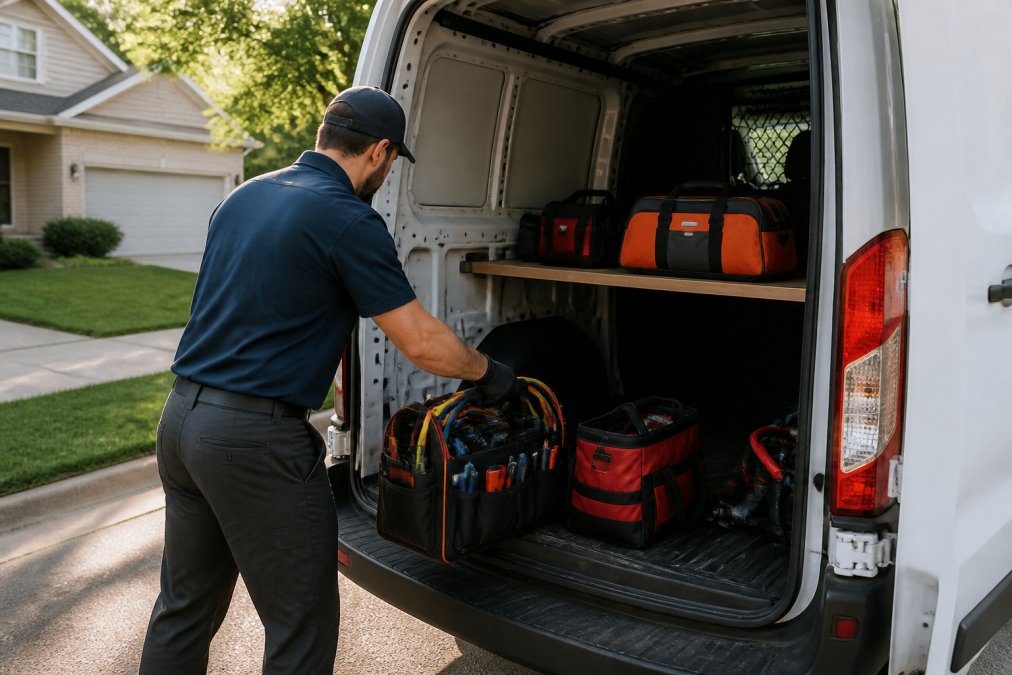
A functional emergency dispatch protocol covers four elements:
- On-call rotation schedule, published at least two weeks in advance, with clear rules about maximum consecutive on-call nights per technician
- Geographic zone assignments, technicians assigned to zones based on home address to minimize drive time
- Parts inventory standard, each on-call van carries a baseline kit of common failure parts (capacitors, contactors, refrigerant, thermostat units)
- Response time commitment, a defined service level agreement target communicated to customers at dispatch (many residential HVAC companies target 60-90 minutes for true emergencies)
According to ACCA residential HVAC service standards, clear service level expectations are a core component of professional HVAC contracting.
On-Call Rotation and Technician Burnout Prevention
Technician burnout from emergency HVAC call volume is a genuine retention crisis. A technician who handles three emergency calls on a Tuesday night, then shows up for a full Wednesday schedule, is not performing at full capacity by afternoon.
Practical burnout prevention measures:
- Limit on-call rotation to no more than one week in four per technician
- Compensate on-call time separately from standard hours, even when calls don't come in
- Implement a call volume cap: if a single technician handles more than two emergency calls in one night, activate the second on-call tech
- Build in mandatory next-day relief: a technician who worked past midnight should not be scheduled for an 8 AM start
Replacing an experienced HVAC technician costs far more than the policy adjustments needed to retain one.
Emergency HVAC Service Pricing Strategies
Emergency service fees exist for a reason: after-hours calls cost more to staff. A sound emergency HVAC service pricing strategy has three components:
Transparent fee disclosure at dispatch. The dispatcher communicates the emergency service fee before confirming the call. This eliminates billing disputes and gives the customer a genuine choice.
Tiered pricing structure. Many contractors use a base after-hours dispatch fee plus standard labor rates, rather than a single inflated rate. Some use a separate weekend rate tier distinct from weeknight rates.
Clear documentation in the service agreement. Commercial HVAC clients should have emergency response fees specified in the contract. Residential customers should see the fee schedule on your website and in your dispatch script.
Pricing should reflect your actual costs and be reviewed at least annually as labor costs shift.
Best AI Phone Systems for HVAC Contractors
Every unanswered emergency HVAC call is a customer who calls a competitor next. During peak call hours in summer or winter, that's a nightly occurrence for any contractor without 24/7 call coverage.
SignatureCloud AI is built specifically for this problem. The platform provides a 24/7 AI phone system designed exclusively for HVAC, plumbing, and electrical contractors. It handles call intake, qualifies callers, captures lead information, and schedules appointments around the clock without requiring an on-call dispatcher for routine calls.
SignatureCloud AI differentiates through specialization. The system understands HVAC emergency criteria, handles trade-specific questions, and routes genuine emergencies to your on-call technician while handling non-urgent calls with scheduling automation. For HVAC contractors managing high call volumes during peak months, that routing capability is the difference between a manageable on-call rotation and a burned-out team.
Turning Emergency HVAC Calls Into Long-Term Customers
The call you handle well at midnight is your best customer acquisition opportunity of the year. A homeowner who called you in crisis, got a calm dispatcher, received a clear ETA, and had a competent technician resolve the problem by 1 AM is not a one-time customer.
Post-emergency customer retention starts during the call itself. A technician who follows up with a written summary of what was found, what was fixed, and what to watch for next is doing something most competitors don't.
Practical retention steps after an emergency call:
- Same-day follow-up call or text confirming the repair held and asking if there are remaining concerns
- Written service summary emailed within 24 hours, including what failed, what was replaced, and recommended next steps
- Preventative maintenance offer framed around the failure that just occurred
- Review request sent 48-72 hours after service, when customer gratitude is fresh
The Small Business Administration guidance on customer retention strategies consistently shows that retaining an existing customer costs a fraction of acquiring a new one.
| Step | Action | Timing | Goal |
|---|---|---|---|
| Call intake | Run five-question triage | During call | Qualify emergency vs. non-urgent |
| Documentation | Log symptoms, decision, dispatch | During call | Liability protection |
| Dispatch | Assign zone technician, communicate ETA | Within 5 minutes | Response time commitment |
| Technician arrival | Carry standard parts kit | On arrival | First-visit resolution |
| Post-service follow-up | Call or text customer | Same day | Retention and review |
| Maintenance offer | Send written service summary + offer | Within 24 hours | Convert to recurring client |
Managing emergency HVAC calls well is a system problem, not a talent problem. Most contractors have capable technicians; what they lack is a structured triage framework, a documented dispatch protocol, and consistent after-hours call coverage. SignatureCloud AI's 24/7 AI phone system handles the after-hours call volume that would otherwise fall through the cracks, qualifying callers, capturing lead information, and routing true emergencies to your on-call team without requiring a human dispatcher around the clock. Get started with SignatureCloud AI and stop losing emergency calls to competitors who answer the phone when you can't.
Frequently Asked Questions
What is considered an emergency HVAC call?
A true emergency HVAC call involves a situation that poses immediate risk to health, safety, or property. This includes complete heating failure during extreme cold, refrigerant leaks with hissing sounds, compressor failure causing indoor temperatures above 90°F for vulnerable occupants, or gas-related odors near HVAC equipment. Comfort complaints like a slightly warmer room or minor thermostat irregularities generally do not meet emergency criteria and can be scheduled for the next available appointment.
How much does an emergency HVAC call cost?
Emergency HVAC service fees vary widely depending on your region, the time of call, and the contractor's pricing structure. After-hours and weekend service typically carries a premium over standard rates to cover technician availability and on-call compensation. Some contractors charge a flat emergency dispatch fee on top of diagnostic and repair costs. Contact individual contractors directly for current pricing, as rates for emergency HVAC calls are not standardized across the industry.
How can contractors automate after-hours HVAC dispatch?
HVAC contractors can automate after-hours dispatch by deploying an AI phone system that handles call intake 24/7. These systems use pre-built triage scripts to qualify emergency HVAC calls, collect customer details, and either escalate to an on-call technician or schedule non-urgent appointments automatically. This removes reliance on answering services that may lack HVAC-specific knowledge, reduces missed calls during peak call hours, and keeps response times consistent without requiring staff to monitor phones overnight.
How do you balance emergency response with technician work-life balance?
A structured on-call rotation is the most reliable way to protect technician wellbeing while maintaining emergency coverage. Assign rotating shifts so no single technician carries continuous after-hours responsibility. Pair this with clear emergency criteria so dispatchers only escalate genuine emergencies, not comfort calls. Compensate on-call time fairly, even when no dispatch occurs. Over time, reducing unnecessary callouts through better call qualification lowers burnout and improves technician retention on your HVAC team.