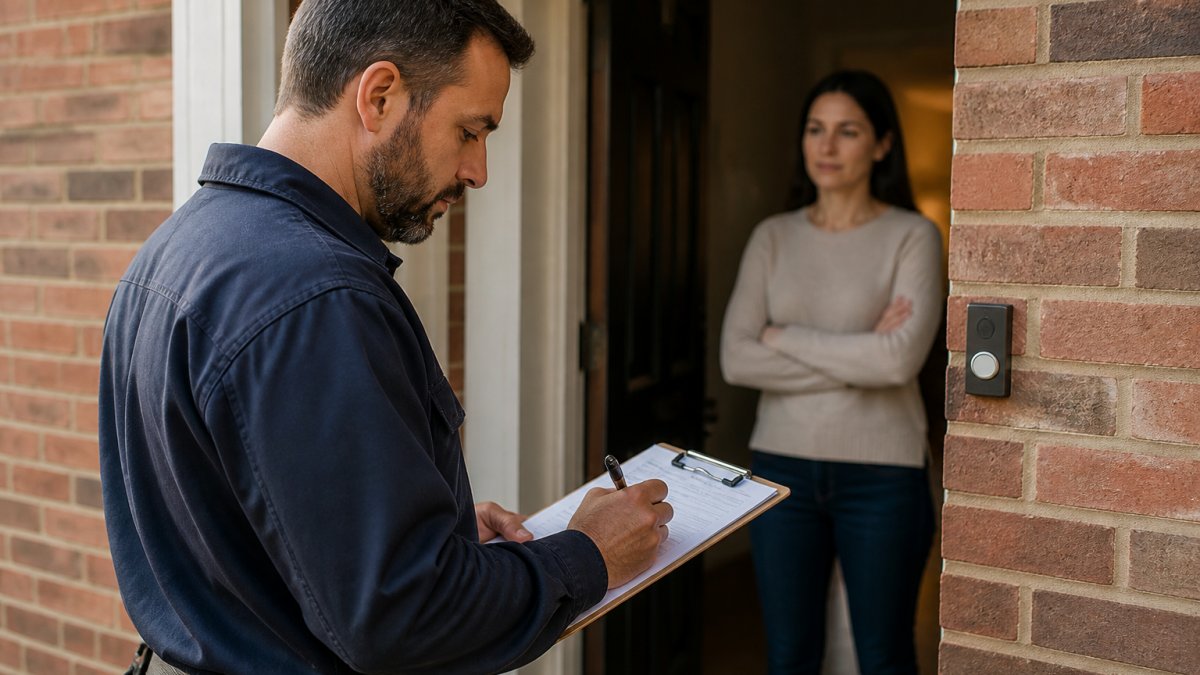
 how-to
Improve Customer Satisfaction for Plumbers: 7 Proven Steps
Table of Contents
- Why Plumber Customer Satisfaction Drives Repeat Business and Referrals
- Plumbing Business Communication Best Practices That Build Trust
- How to Automate After Hours Calls Without Losing the Personal Touch
- Plumbing Customer Service Scripts for Booking, Arrival, and Follow-Up
- How to Handle Plumbing Customer Complaints and Recover the Relationship
- Turn Feedback and Reviews Into a Plumber Customer Satisfaction Loop
- Retaining Technicians to Protect Customer Satisfaction Scores
- Conclusion
- Frequently Asked Questions
Last Updated: September 17, 2026
Why Plumber Customer Satisfaction Drives Repeat Business and Referrals
Repeat business is the cheapest growth a plumbing company has: the fastest way to improve customer satisfaction for plumbers is happy customers who call again and refer neighbors, keeping a small shop booked through slow seasons.
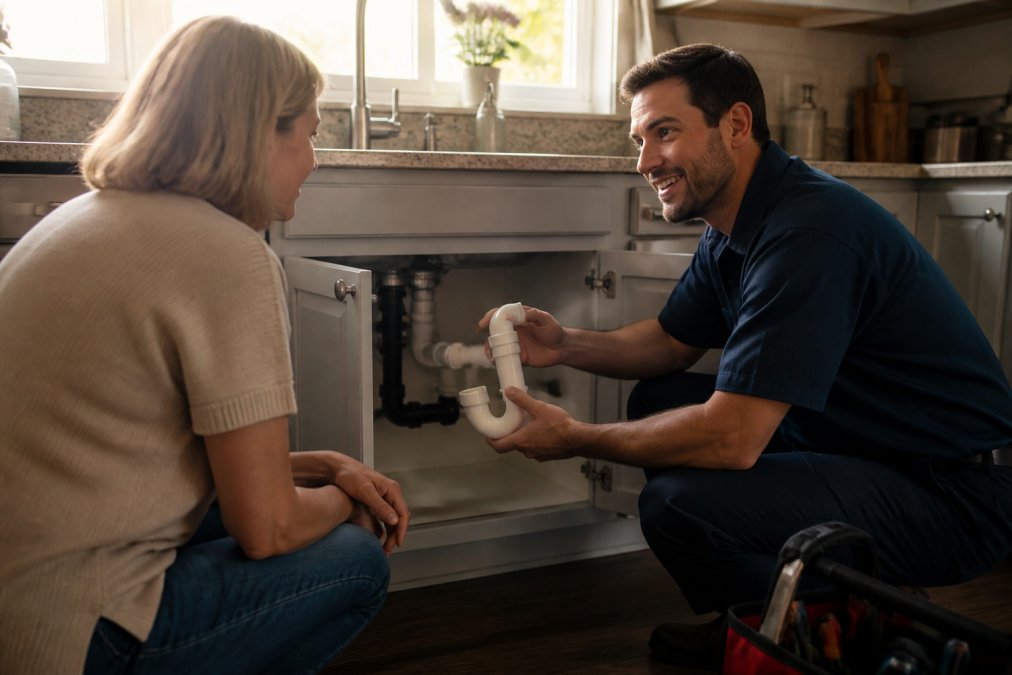
- Answer every call, including after hours
- Show up when you said you would
- Explain the price before you start
- Follow up after the job
Plumbing Business Communication Best Practices That Build Trust
Trust is built in small moments: the confirmation text, the arrival call, the clear explanation of what went wrong. Plumbing business communication best practices come down to three rules: confirm early, update often, never leave a customer guessing.
Set Clear Service Expectations Before You Arrive
"Thanks for booking with us. Your technician will arrive between 1 and 3 p.m. today. The diagnostic fee is $X, and we'll give you a full quote before any work begins. If anything changes, we'll text you right away."
Use Automated Notifications and On-Time Arrival Updates
Automated notifications are the easiest win in plumbing: a text when the tech is dispatched, another at 30 minutes out, and one on arrival. These updates reduce no-shows and cut inbound calls. But keep a real person reachable behind every message, customers want a human when something goes wrong.
How to Automate After Hours Calls Without Losing the Personal Touch
After-hours calls are where plumbing businesses lose the most money. A missed 9 p.m. call is a customer dialing the next plumber. Automating after hours calls protects that revenue without hiring a night shift.
The approach that works for most shops:
- Route all after-hours calls to a system that answers on the first ring
- Capture the caller's name, address, and problem in plain language
- Book the appointment or flag it as an emergency
- Send the customer a confirmation text immediately
- Deliver the details to the on-call tech's phone
Plumbing Customer Service Scripts for Booking, Arrival, and Follow-Up
Plumbing customer service scripts give your team a consistent, professional voice. They aren't word-for-word cages, they're starting points that keep every interaction on track.
How to Handle Plumbing Customer Complaints and Recover the Relationship
Complaints handled well turn angry customers into loyal ones. The goal isn't to win the argument, it's to fix the problem and rebuild trust fast. Here's how to handle plumbing customer complaints without losing the relationship.
The Service Recovery Sequence: Acknowledge, Fix, Follow Up
- Acknowledge. Listen without interrupting. Repeat the problem back so the customer knows you heard it.
- Fix. Offer a clear solution with a timeline. If the fix costs money, explain why before you start.
- Follow up. Call 48 hours later to confirm the fix held. This step is what customers remember.
| Step | What to Do | Timing | Why It Works |
|---|---|---|---|
| Acknowledge | Listen, repeat back, apologize | Same day | Defuses anger |
| Fix | Offer solution with timeline | Within 24 hours | Shows action |
| Follow up | Confirm fix, ask for feedback | 48 hours later | Builds loyalty |
Most complaints come from silence, not the original problem. A customer who hears nothing for three days is angrier than one whose pipe leaked twice but got a callback within an hour.
De-Escalation Scripts for the Four Complaints You Will Actually Get
Generic advice doesn't help a tech standing in a flooded kitchen. These scripts cover the failure modes behind most plumbing complaints.
The Cost of Recovery vs. the Cost of a Lost Customer
Shops often under-spend on recovery because they treat a callback as a loss. Run the math the other way: a return visit costs a few hours of a tech's time, while a lost customer costs every future repair, referral, and review. A same-day callback typically pays for itself within a year through repeat work alone.
Document Everything Before the Complaint Arrives
The best de-escalation tool is a photo. Before-and-after photos, a signed work authorization, and a timestamped arrival log turn a "he said, she said" dispute into a five-minute conversation. Build the habit on every job.
Turn Feedback and Reviews Into a Plumber Customer Satisfaction Loop
Online reputation management is not a marketing chore. It is a feedback system. Every review, good or bad, tells you what to fix next. A customer feedback loop turns those signals into changes.
The loop works like this:
- Ask every customer for feedback after the job
- Sort comments into themes: timeliness, price, professionalism, quality
- Fix the top theme each month
- Ask happy customers for a public review
The Post-Service Follow-Up Workflow Most Shops Skip
Most plumbing companies ask for a review once and never touch the customer again. Shops that move their satisfaction scores run a timed follow-up sequence instead. Here's a workflow that fits a small shop:
- Job close (same day). The tech marks the job complete in the field app. That triggers an automatic SMS: "Thanks for choosing [Company]. Your invoice is attached. Reply here if anything looks off." No review ask yet, the customer has not used the fixture long enough to know if it holds.
- 24-hour check-in (automated SMS). "Hi [Name], just checking in on yesterday's [repair]. Is everything working the way you expected? Reply YES or NO." A YES routes to the review request. A NO routes to a human callback within the hour.
- 72-hour review request (automated email). Send the public review link only to customers who did not flag a problem. This keeps your star rating clean because unhappy customers get a private channel first.
- 30-day maintenance nudge (automated email). A soft reminder about seasonal checks or a maintenance plan. This is where repeat business actually comes from.
Segment Feedback Before You Act On It
Not all feedback deserves the same response. Sort incoming comments into four buckets and route them differently:
- Safety or code issues, call the customer the same day, no exceptions.
- Workmanship complaints, dispatch a return visit under warranty.
- Communication complaints (late arrival, no update), coaching signal for the tech and the dispatcher.
- Price complaints, usually a quoting problem, not a tech problem. Review the estimate language.
Where Reviews Actually Come From
Digital invoicing makes the review ask easy: send the invoice by email with a one-click review link. Customers who paid by card on their phone are already in the app, so the ask feels natural. Paired with the 72-hour email above, you get two natural touchpoints instead of one awkward ask at the door.
Retaining Technicians to Protect Customer Satisfaction Scores
Technician turnover is the quiet killer of customer satisfaction. Every time a familiar face leaves, a customer must build trust with someone new, and the new tech must learn the routes, neighborhoods, and quirks of each job.
What actually keeps techs around:
- Pay that matches the market, reviewed yearly
- Predictable schedules, not on-call chaos
- Modern equipment that makes the work easier
- A clear path to more responsibility or pay
- Respect for their time off
Conclusion
Plumbing customer satisfaction isn't a mystery. The habits that improve customer satisfaction for plumbers are simple: answer every call, set clear expectations, follow up after the job, and treat your techs well enough that they stay. Shops that master those habits win the repeat business and referrals that keep them booked.
Frequently Asked Questions
What are the three C's of customer satisfaction in trade services?
The three C's are communication, consistency, and care. Communication means proactive updates before, during, and after the job. Consistency means the same professional appearance, on-time arrival, and transparent pricing on every call. Care means treating the customer's home with respect and following up after the work is done. Plumbers who apply all three see stronger repeat business and higher customer satisfaction scores.
How does automated scheduling impact plumbing customer satisfaction?
Automated scheduling removes the back-and-forth that frustrates callers. A 24/7 AI phone system can book appointments, send confirmation texts, and push arrival reminders without a dispatcher. Customers get instant answers at 10 p.m. when a water heater fails, and your team gets a filled calendar. The result is fewer missed calls, fewer no-shows, and a smoother job-booking process from first ring to final invoice.
What are the best ways to handle negative plumbing reviews?
Respond within 24 hours, publicly and calmly. Acknowledge the specific issue, apologize for the experience, and offer a direct line to resolve it offline. Never argue or blame the customer in the response. After the issue is fixed, ask the customer if they would update the review. A well-handled complaint often turns a one-star reviewer into a loyal client, and future readers notice how you responded.
How can plumbers improve their customer service experience on every job?
Start with a confirmation call or text the day before, then send an on-my-way notification with the technician's name. Arrive in a marked vehicle and clean uniform, lay down floor protection, and walk the customer through the diagnosis before starting work. Provide a written estimate, explain the workmanship guarantee, and send a digital invoice. Follow up two days later to confirm everything works. Each step is small, but together they define the customer journey.